



Common Jewellery-Making Mistakes and How to Avoid Them
Whether you make bracelets, necklaces, earrings, or leather cord designs, most jewellery-making problems come from a few repeatable mistakes: poor planning, weak materials, incorrect tools, rushed finishing, and skipping wear tests. At Sun Enterprises, we supply the cords, findings, and components that help makers create jewellery that not only looks beautiful but also stands up to everyday wear.
Buying Supplies Without a Plan
A common beginner mistake is buying large quantities of beads, wire, leather cord, findings, and tools before deciding which techniques to focus on. This often leads to cluttered workspaces, wasted materials, and unfinished projects.
How to avoid it:
-
Start with one technique, such as stringing, wirework, leather cord jewellery, or simple metalwork.
-
Buy enough materials for a few practice pieces before ordering production quantities.
-
Keep a simple project plan: design, measurements, materials, findings, and finishing method.
-
Build your tool and component collection gradually as your skills develop.
A focused approach helps you learn faster, reduce waste, and create more consistent results.
Choosing Low-Quality Materials
Cheap beads, wire, clasps, crimps, and connectors may seem like a saving at first, but they can tarnish, bend, break, or make a finished piece look less refined. Weak findings are one of the most common reasons handmade jewellery fails during daily wear.
How to avoid it:
-
Choose reliable suppliers for leather cord, chains, clasps, crimps, and metal components.
-
Match component quality to the intended price point of the finished piece.
-
Test clasps, jump rings, crimps, and cord ends before using them in customer orders.
-
Avoid unknown metal compositions if you plan to sell your jewellery.
Quality materials do not always need to be expensive, but they should be durable, consistent, and suitable for the design.
Using the Wrong Tools
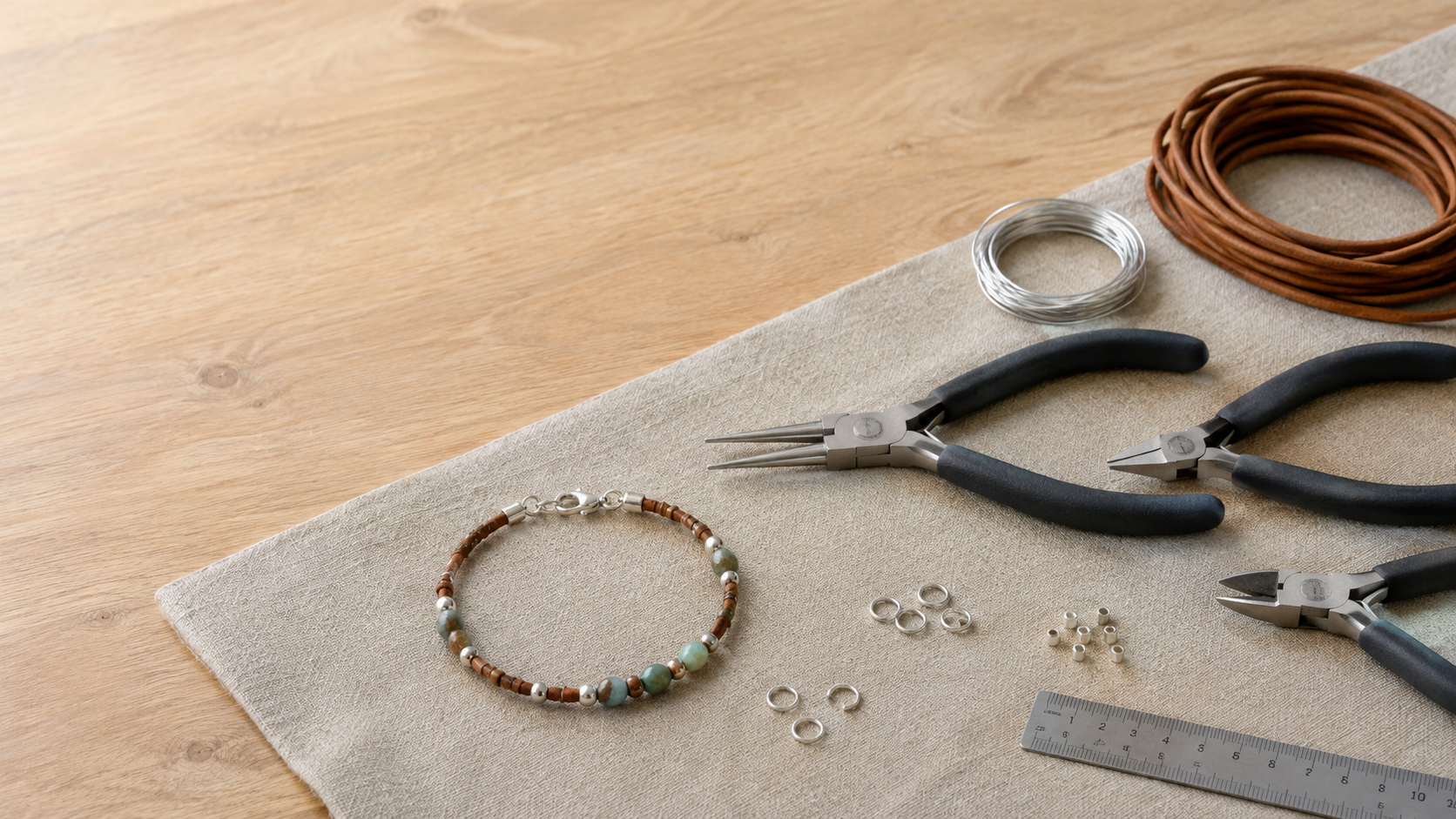
Household scissors, weak pliers, and improvised tools can damage wire, leave sharp ends, and make small components difficult to control. Jewellery making depends on precision, so the right tools matter from the very first project.
Essential starter tools include:
-
Round-nose pliers for loops and curves
-
Chain-nose pliers for gripping and bending
-
Flush cutters for clean wire cuts
-
Crimping pliers for secure crimps
-
A jewellery ruler or measuring tape
Good tools create cleaner loops, tighter wraps, and safer finishes. They also reduce frustration and material waste.
Measuring Incorrectly
Necklaces that are too short, bracelets that are too loose, and earrings that are uneven are often caused by skipping accurate measurements. This is especially important for bracelets, where comfort and fit directly affect whether someone will actually wear the piece
How to avoid it:
-
Measure the wrist, neck, or desired drop length before cutting materials.
-
Add allowance for clasps, knots, crimps, end caps, and natural movement.
-
Make one sample piece before producing multiple versions.
-
Record successful measurements for future designs.
Careful measuring saves time, reduces waste, and makes your finished pieces feel more considered.
Opening Jump Rings Incorrectly
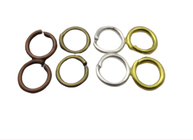
Pulling a jump ring apart weakens its shape and can leave a visible gap. That gap can catch on clothing, scratch skin, or allow the ring to open during wear.
How to avoid it:
-
Use two pairs of pliers.
-
Twist the ring open sideways: one end forward, one end backward.
-
Close it by twisting the ends back together until they meet cleanly.
-
Check that there is no visible gap before attaching it to a finished piece.
This small technique makes a major difference in both durability and appearance.
Making Weak Loops and Wraps
Uneven loops, loose wraps, and exposed wire ends are common beginner issues. They can make a piece look unfinished and may cause charms, pendants, or links to come loose over time.
How to avoid it:
-
Grip the wire at the same point on your round-nose pliers each time to create consistent loops.
-
Make complete wraps—usually at least two tight coils—around the base wire.
-
Trim excess wire with flush cutters.
-
Tuck in any sharp wire end so it cannot scratch the skin.
Practising on scrap wire before working on a final design is one of the fastest ways to improve consistency.
Ignoring Finishing Details
A piece can have beautiful beads and a strong design, but still look amateur if it has scratches, sharp edges, visible glue, uneven polish, or poorly aligned components. Professional jewellery depends heavily on finishing.
How to avoid it:
-
Inspect every piece for sharp edges, burrs, loose findings, and visible seams.
-
Sand and polish progressively rather than rushing between grit levels.
-
Clean the piece before final inspection.
-
Check symmetry, alignment, and surface finish under good lighting.
Professional quality control focuses on these exact details: surface defects, alignment, sharp edges, solder joints, clasps, and overall finish.
Making Pieces Too Heavy
Heavy earrings, chunky bracelets, and oversized pendants may look striking on a display card but become uncomfortable in real life. Extra weight also puts stress on ear wires, jump rings, cord, and clasps.
How to avoid it:
-
Consider the total weight of beads, metal, charms, and findings.
-
Use lighter components for earrings.
-
Reinforce connection points on heavier designs.
-
Wear the finished piece for at least 15–30 minutes before selling or gifting it.
Comfort is part of good design, not an afterthought.
Skipping Wear Tests
Many makers inspect a piece visually but never wear it. A bracelet may look perfect on a table but twist awkwardly on the wrist; an earring may catch in hair; a necklace clasp may sit uncomfortably at the back of the neck.
How to avoid it:
-
Wear the finished piece while moving normally.
-
Check that clasps open and close smoothly.
-
Look for twisting, pulling, scratching, or pressure points.
-
Test the piece after gentle movement, not only while it is stationary.
A short wear test can reveal problems that are impossible to see on a workbench.
Rushing the Final Check
The final inspection is where small faults are caught before a piece reaches a customer. Skipping it often leads to returns, repairs, and lost trust. Professional jewellery production treats inspection as a core part of the process, not an optional final step.
Use this final checklist:
-
Are all jump rings fully closed?
-
Are clasps secure and easy to use?
-
Are there sharp edges or exposed wire ends?
-
Are beads, charms, and pendants attached firmly?
-
Is the piece symmetrical and balanced?
-
Does it look clean, polished, and free of fingerprints or residue?
-
Has it been worn and tested?
FAQ
What are the most common jewellery-making mistakes?
The most common mistakes include buying supplies without a plan, using low-quality materials, using the wrong tools, inaccurate measuring, weak loops, poor jump-ring technique, and rushing the finishing process.
How can I make my handmade jewellery look more professional?
Use consistent materials, measure accurately, create clean loops and wraps, close jump rings properly, and inspect every piece for sharp edges, alignment issues, and surface defects.
Why do my jump rings keep opening?
Jump rings often open because they have been pulled apart instead of twisted sideways. Use two pairs of pliers and twist the ends forward and backward to open and close them without weakening the ring.
What tools should a beginner jewellery maker buy first?
Start with round-nose pliers, chain-nose pliers, flush cutters, crimping pliers, and a measuring tape or jewellery ruler. These cover most basic stringing, wirework, and finishing tasks.
How do I stop bracelets from breaking?
Use durable cord or wire, choose findings that match the material’s actual size, reinforce connection points, and wear-test the finished bracelet before selling or gifting it.
How do I check jewellery quality before selling it?
Inspect the piece for sharp edges, loose findings, visible glue, uneven loops, weak clasps, and poor alignment. Then wear it briefly to check comfort, balance, and security.
Where can I find quality jewellery-making components?
Sun Enterprises supplies leather cords, jewellery cords, findings, and components for makers and brands creating professional handmade jewellery.


