


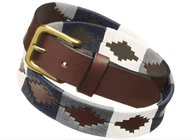
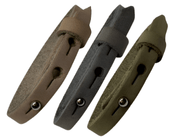
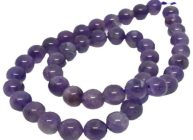
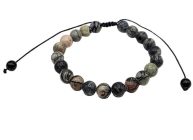
From Sketch to Jewellery Collection: The Complete Guide for Designers
From Sketch to Jewellery Collection: The Complete Guide for Designers
You have an idea for a jewellery collection.
Maybe it started with a sketch.
Perhaps you saw an interesting combination of leather and metal, imagined a gemstone necklace in your own colour palette, or have been thinking about launching your own jewellery brand for years.
But then the questions begin.
How do I turn my sketch into an actual product?
Do I need a technical drawing?
Which materials should I choose?
Can I have my own colours?
How do I put my logo on the jewellery?
Can someone create a clasp specifically for my brand?
Do I need to create a mould?
How much do I need to order?
Should I make a sample first?
And how do I find a supplier who can actually help me through all of this?
For new designers, the distance between an idea and a finished collection can initially seem enormous.
It doesn't have to be.
At Sun Enterprises, we work with designers, jewellery companies, wholesalers and emerging brands at different stages of product development. Some customers arrive with detailed specifications. Others come to us with little more than a photograph, sketch, logo or idea.
This guide explains the journey from that first idea to a finished jewellery collection — and the important decisions you will encounter along the way.
1. I Have a Jewellery Idea. Where Do I Start?
Start with the idea itself.
One of the biggest mistakes new designers make is believing that they need to understand every technical detail before speaking to a supplier.
You don't necessarily need to know whether your leather cord should be 4 mm or 5 mm.
You may not know which grade of stainless steel you want.
You don't need to know the exact dimensions of your clasp.
And you certainly don't need to understand every manufacturing process.
What you do need is a clear idea of what you are trying to create.
Start collecting information that communicates your vision.
This could include:
- Hand-drawn sketches
- Inspiration photographs
- Mood boards
- Existing products you like
- Your logo
- Brand colours
- Material preferences
- Gemstone ideas
- Target customer
- Approximate retail price
- Desired quality level
- Estimated quantities
Think of this as creating a visual language for your collection.
The better you can communicate what you want the product to feel and look like, the easier it becomes for a development partner to help translate that vision into something manufacturable.
2. Do I Need a Professional Jewellery Drawing?
Not necessarily.
Professional CAD drawings and technical specifications become valuable when a design becomes more complex, particularly for custom metal components.
But many product-development conversations begin with something much simpler.
You might send:
A sketch.
A photograph.
A physical sample.
A logo.
An existing product that you want to modify.
Or even:
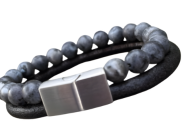
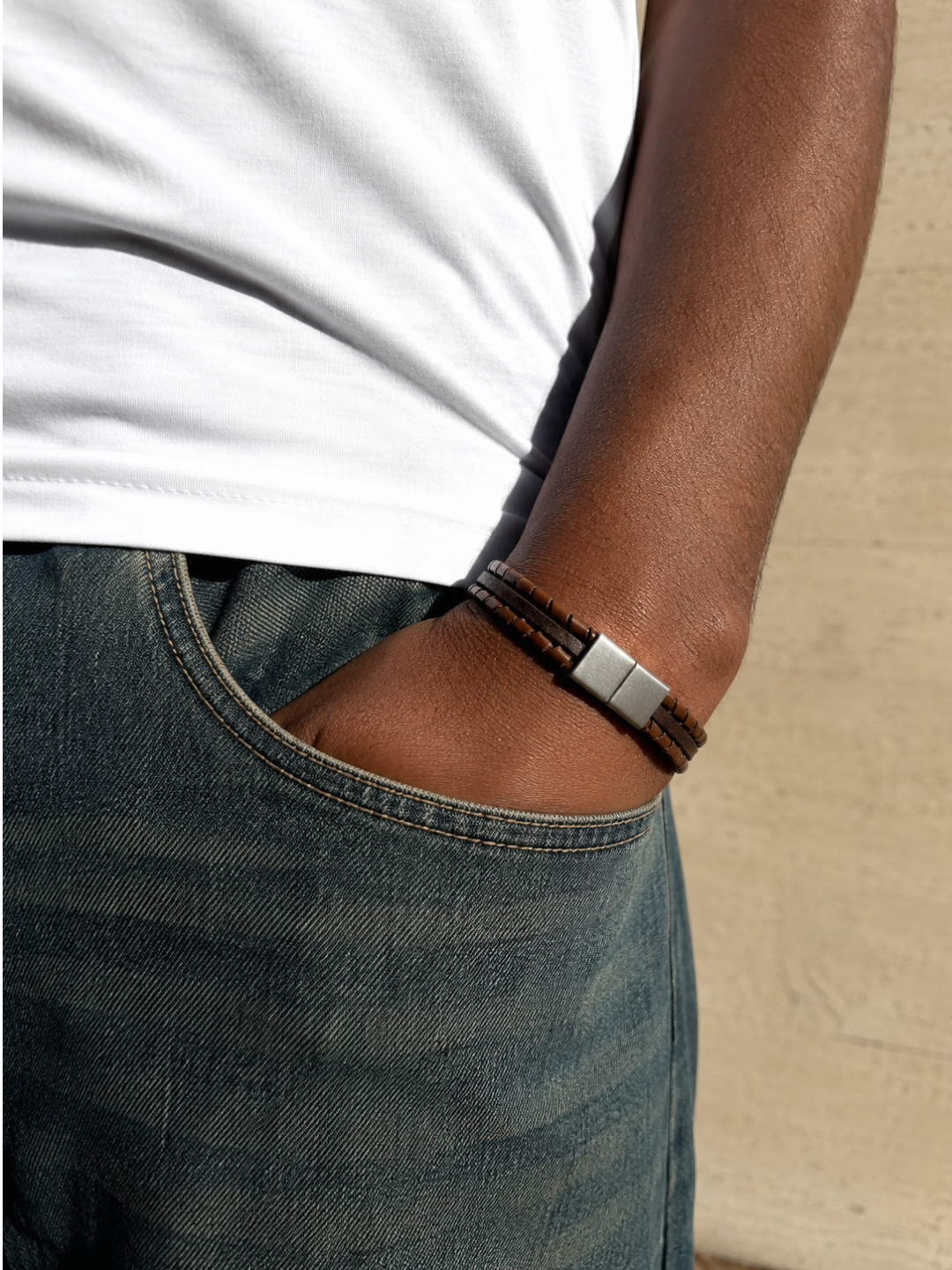
"I want to create a premium men's leather bracelet using dark green braided leather with a black clasp carrying my logo."
That is enough to start a conversation.
The technical details can then be developed as the concept becomes clearer.
3. How Do I Turn My Sketch Into a Manufacturable Product?
This is where design meets manufacturing reality.
A beautiful drawing doesn't automatically mean that a product can be manufactured exactly as drawn.
Several questions need to be considered:
Is the clasp strong enough?
Will the leather fit correctly into the end cap?
Is the logo too small to engrave clearly?
Will the gemstone hole accommodate the required cord?
Is the chain strong enough for the pendant?
Can the required plating be applied to the selected material?
Will the bracelet be comfortable when worn?
These small technical details often determine whether a beautiful concept becomes a successful product.
This is why working with an experienced product-development partner can be valuable.
Instead of simply asking:
"Can you make this?"
The discussion becomes:
"How can we make this work?"
4. How Do I Choose the Right Material?
Material selection affects almost everything:
Appearance · Weight · Durability · Feel · Cost · Colour · Finish · Manufacturing possibilities
There is no single "best" material.
There is only the material that works best for the particular product.
For example, a designer developing a men's bracelet might combine:
Braided leather + stainless-steel clasp + engraved logo
A delicate necklace could combine:
Stainless-steel chain + gemstone pendant + small branded charm
A premium collection might explore:
Sterling silver + gemstones + customized components
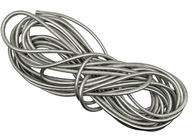
Sun Enterprises works across different material categories including leather, stainless steel chains, Zamak, sterling silver, gemstones and selected precious metals, allowing designers to explore different combinations.
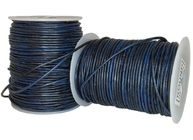
5. How Can I Customize Leather Cord?
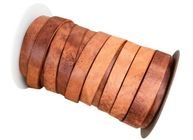
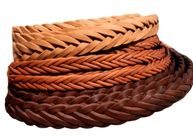
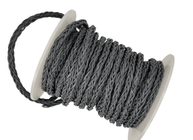
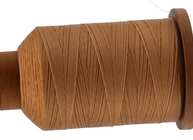
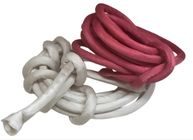
Leather is particularly interesting because a seemingly simple cord can be customized in many ways.
Depending on the project, designers can explore:
Colour
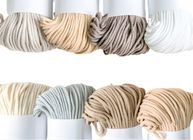
Your collection does not have to be limited to standard black or brown.
Specific colours can be explored based on references, samples and collection requirements.
Dimensions
Depending on the construction, leather can be developed in different:
Diameters · Widths · Thicknesses
Construction
Options can include:
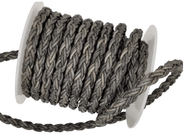
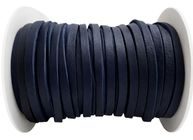
Round · Flat · Braided · Folded · Stitched
Finish
Different textures and surface effects can completely change the character of the product.
Engraving
Leather can also become part of the brand identity through custom engraving.
Logos, names, symbols, patterns or decorative designs can potentially be incorporated directly into the leather.
That transforms leather from simply being a material into a recognizable design element.
6. Can My Jewellery Use My Exact Brand Colours?
Colour consistency is extremely important when building a recognizable brand.
Imagine your brand identity revolves around a distinctive dark green.
Your packaging uses it.
Your website uses it.
Your marketing uses it.
Why shouldn't your jewellery use it?
Depending on the material and project, designers can explore custom colours across areas such as:
Leather · Plating · Gemstones · Components
When communicating colour, physical samples and recognized colour references can be much more useful than simply saying "dark green" or "rose gold."
Remember:
Your idea of gold may not be your supplier's idea of gold.
Clear references reduce misunderstanding.
7. How Do I Put My Logo on Jewellery?
This is one of the most important questions for new brands.
A logo transforms an attractive product into your product.
There are several ways branding can potentially be incorporated.
Engraving
Your logo or brand name can be engraved onto suitable leather or metal components.
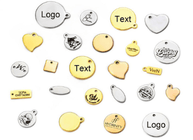
Logo Tags
A small branded metal tag can become a recurring feature across necklaces and bracelets.
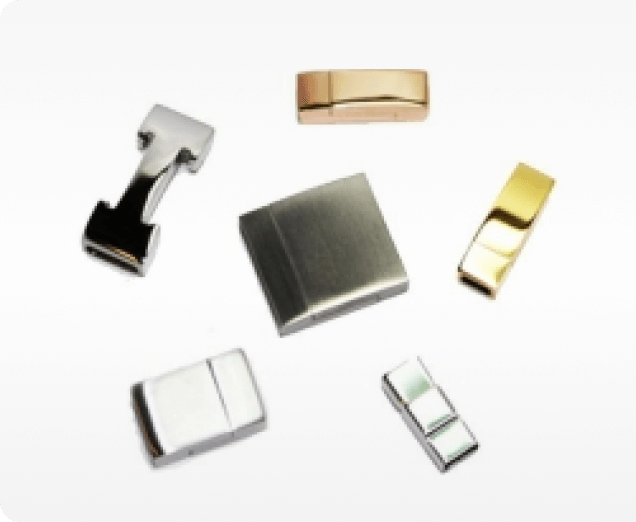
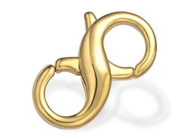
Branded Clasps
Instead of hiding your brand, the wholesale clasps itself can become part of your visual identity.
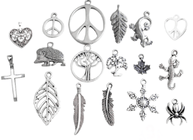
Logo Charms
Your logo or symbol could become a decorative component.
Completely Custom Components
For more distinctive designs, a completely new component can be developed around your logo.
This leads to another important question.
8. Can I Create My Own Clasp or Jewellery Component?
Yes — and this is where product development becomes particularly exciting.
Imagine that your jewellery brand uses a distinctive geometric symbol.
Instead of purchasing a standard clasp that hundreds of other brands can also buy, you might want to incorporate that shape into your clasp.
That may require developing a completely new component.
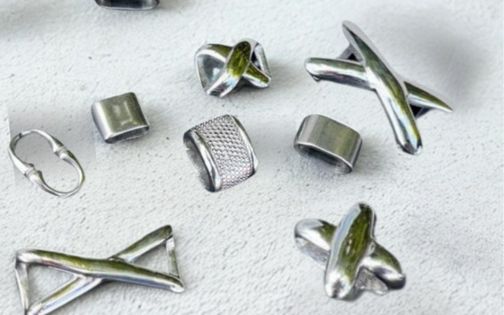
Depending on the project, custom components can include:
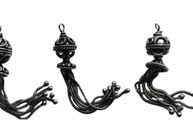
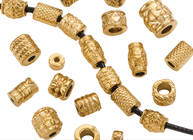
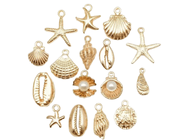
Clasps · Connectors · End caps · Beads · Charms · Logo tags · Pendants · Decorative elements
Materials could include:
Stainless steel · Zamak · Sterling silver · Selected precious metals
For completely new shapes, a custom mould or tooling may be required.
9. What Is a Custom Mould and When Do I Need One?
Think of a mould as the tool required to repeatedly manufacture your unique component.
If you choose an existing clasp and simply engrave your logo onto it, you may not need a new mould.
But if you say:
"I want the clasp itself to be shaped like my logo."
you may need a completely new component.
This can involve:
Design → Technical development → Mould/tooling → Prototype → Testing → Production
Creating your own mould can require additional investment, but it gives your brand something extremely valuable:
A component that isn't simply available to everyone else.
For established brands — and ambitious emerging brands — proprietary components can become an important part of product identity.
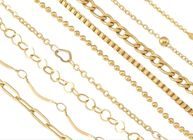
10. Can I Customize Jewellery Chains?
Absolutely.
Chains are sometimes treated as a secondary component, but they have an enormous influence on the finished jewellery.
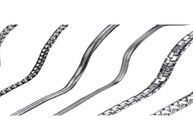
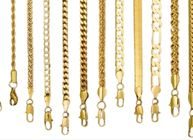
Designers can consider:
Chain style
Link shape
Link dimensions
Thickness
Length
Weight
Colour
Surface finish
Plating
A delicate gemstone pendant might need a completely different chain from a chunky men's necklace.
Sun Enterprises can work with customers on customized stainless-steel chain requirements so the chain becomes part of the overall design rather than an afterthought.
11. How Do I Choose the Right Plating?
Plating influences both the appearance and positioning of jewellery.
Common visual directions include:
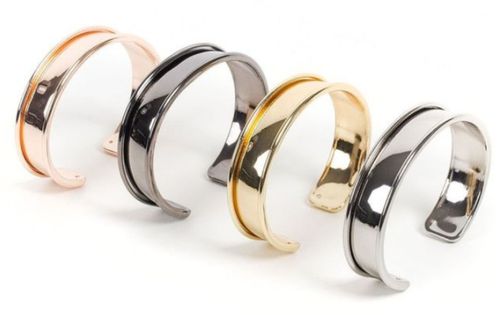
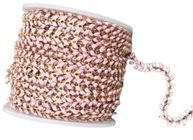
Gold · Rose gold · Silver-tone · Black · Antique effects · Matte finishes · Polished finishes
But designers should think beyond simply asking:
"Which colour do I like?"
Consider:
Does it match my gemstones?
Does it complement the leather?
Does it match other pieces in my collection?
What is the intended use of the jewellery?
What material is underneath?
What durability do I require?
The goal should be to develop a finish that works visually and technically with the complete product.
12. How Do I Choose Gemstones for My Collection?
Gemstones offer enormous creative possibilities.
Consider:
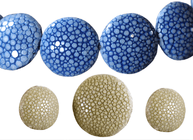
Stone type · Colour · Shape · Size · Cut · Combination · Pattern
Instead of selecting gemstones individually, think about the story of the collection.
Perhaps your summer collection uses turquoise, white and sandy tones.
Maybe your men's collection uses black, tiger-eye and earthy colours.
Perhaps every necklace uses a gemstone associated with a particular meaning.
Sun Enterprises can work with designers on customized gemstone combinations and integrate them with chains, clasps and branded components.
13. Should I Develop One Product or an Entire Collection?
For a new brand, starting smaller can often be sensible.
Instead of immediately developing 30 completely different products, consider creating a design language.
For example:
One signature clasp.
Three leather colours.
Two bracelet designs.
One necklace.
One gemstone combination.
The same logo tag across everything.
Now your products feel connected.
As the brand develops, the same visual language can expand into additional products.
Consistency helps customers begin to recognize your brand.
14. What Is a Prototype and Why Is It Important?
A prototype or sample allows you to experience the design as a real object.
Something can look perfect on a computer screen but feel completely different when worn.
A sample lets you evaluate:
Size · Weight · Comfort · Colour · Logo position · Clasp functionality · Leather thickness · Chain proportion · Gemstone combination · Overall appearance
This is your opportunity to make changes.
Maybe the logo needs to be smaller.
Maybe the clasp feels too heavy.
Maybe the leather needs to be 1 mm thinner.
Maybe the gold colour doesn't complement the gemstone.
Making these discoveries before larger-scale production can save considerable time and cost.
15. What Is MOQ?
MOQ means Minimum Order Quantity.
This is the minimum quantity a supplier requires for a particular product or production run.
MOQ can vary significantly depending on whether you are purchasing:
- Standard stock
- Customized colours
- Special plating
- Customized chains
- Engraved products
- Completely new moulds
- Custom components
The more customized the product becomes, the more production preparation may be required.
This is why discussing your expected quantities early in the development process is important.
16. How Much Will My Jewellery Cost to Manufacture?
There is no universal answer.
Manufacturing cost can depend on:
Material + dimensions + weight + complexity + gemstones + plating + engraving + moulds + quantity + packaging + labour
This is why asking:
"How much does a custom bracelet cost?"
without providing any specification is difficult to answer accurately.
Instead, communicate:
What you want to create.
What materials you prefer.
Your expected quantity.
Your target positioning.
Your target price if available.
This allows your development partner to explore realistic possibilities.
17. How Long Does Product Development Take?
Again, it depends on the complexity.
Selecting an existing leather cord and clasp is very different from developing:
A custom-coloured braided leather + new branded clasp + new mould + custom plating + engraved logo.
A development process may involve:
Idea → Specifications → Material selection → Sampling → Adjustments → Approval → Production
Build development time into your collection calendar.
Don't start developing your Christmas collection in November.
18. How Do I Know Whether a Supplier Is Reliable?
Price should never be your only consideration.
Ask potential suppliers:
How long have you been operating?
What markets do you supply?
Can you customize products?
Can you make samples?
Can you help with technical development?
Which materials do you specialize in?
Can you provide consistent repeat production?
How do you communicate during development?
Can you support me if my collection grows?
The cheapest component can become very expensive if it arrives late, inconsistent or different from what you approved.
19. Should I Work With Several Suppliers or One Development Partner?
There are advantages to specialist suppliers.
But managing many suppliers can become complicated.
Imagine coordinating:
Supplier A → Leather
Supplier B → Chains
Supplier C → Clasps
Supplier D → Gemstones
Supplier E → Engraving
Supplier F → Plating
Supplier G → Custom mould
You now have to make sure seven companies produce components that fit together correctly.
Working with a partner capable of supporting several elements of the development process can simplify communication and improve consistency.
This is one reason Sun Enterprises has developed expertise across leather, chains, gemstones, clasps, engraving, metal components, moulds, plating and customization.
20. What Should I Send Sun Enterprises to Get Started?
This is perhaps the easiest question.
Send us what you have.
It might be:
A sketch.
A photograph.
A logo.
A physical sample.
A colour reference.
A mood board.
An existing product.
A drawing.
Or simply an idea.
Then tell us:
What are you trying to create?
Who is it for?
What materials do you have in mind?
Approximately how many pieces are you considering?
When would you like the product?
We can then explore the next steps together.
21. How Can I Make My Jewellery Brand Look Different From Everyone Else?
This is perhaps the most important question in this entire guide.
You can buy a standard chain.
Add a standard pendant.
Use a standard clasp.
Put it into a nice box.
And you have a product.
But hundreds of other brands can potentially create something similar.
Customization gives you an opportunity to develop recognizable design DNA.
That could be:
Your own leather colour.
Your signature clasp.
Your logo engraving.
A distinctive chain.
A recurring gemstone combination.
A particular plating colour.
A custom charm.
A recognizable texture.
Or a component created specifically for your brand.
The objective isn't necessarily to customize everything.
It is to identify the few elements that make your product recognizably yours.
22. What Happens After My First Collection?
Your first collection is only the beginning.
Once you understand what your customers respond to, you can develop further.
Perhaps your black leather bracelet becomes your bestseller.
Next season you could introduce:
New colours.
A matching necklace.
Different plating.
A gemstone variation.
A women's version.
A premium version.
A limited edition.
This is where a long-term supplier relationship becomes valuable.
Your supplier already understands your dimensions, materials, colours, components, logo and quality expectations.
Instead of starting from zero every season, you can build on what you have already developed.
From Sketch to Brand
Building a jewellery collection is not one decision.
It is a sequence of decisions:
IDEA
↓
DESIGN
↓
MATERIALS
↓
COLOURS
↓
LOGO & BRANDING
↓
LEATHER / CHAINS / GEMSTONES
↓
CLASPS & COMPONENTS
↓
MOULDS & CUSTOMIZATION
↓
PLATING & FINISHES
↓
PROTOTYPE
↓
ADJUSTMENTS
↓
PRODUCTION
↓
COLLECTION
↓
YOUR BRAND
The process may look complicated when you see everything at once.
But you don't need to solve every question on the first day.
You simply need somewhere to start.
Start With Your Idea
At Sun Enterprises, we believe designers should be able to approach us at different stages of their journey.
You might be an established jewellery company looking for a new component.
You might be a designer developing your next collection.
Or you might be sitting at home with the first sketch of a brand that doesn't exist yet.
Show us what you want to create.
Bring us your:
Idea · Sketch · Logo · Sample · Photograph · Colour · Inspiration
Together, we can explore the possibilities across leather cords, chains, gemstones, clasps, engraving, custom logos, metal components, mould development, colours, plating and finishing.
Because the journey from a sketch to a jewellery collection doesn't have to begin with knowing every answer.
It begins with an idea.
Your idea. Your design. Your logo. Your collection. Your brand.
Sun Enterprises — helping designers turn ideas into products.


