









What the Industry Must Know Today
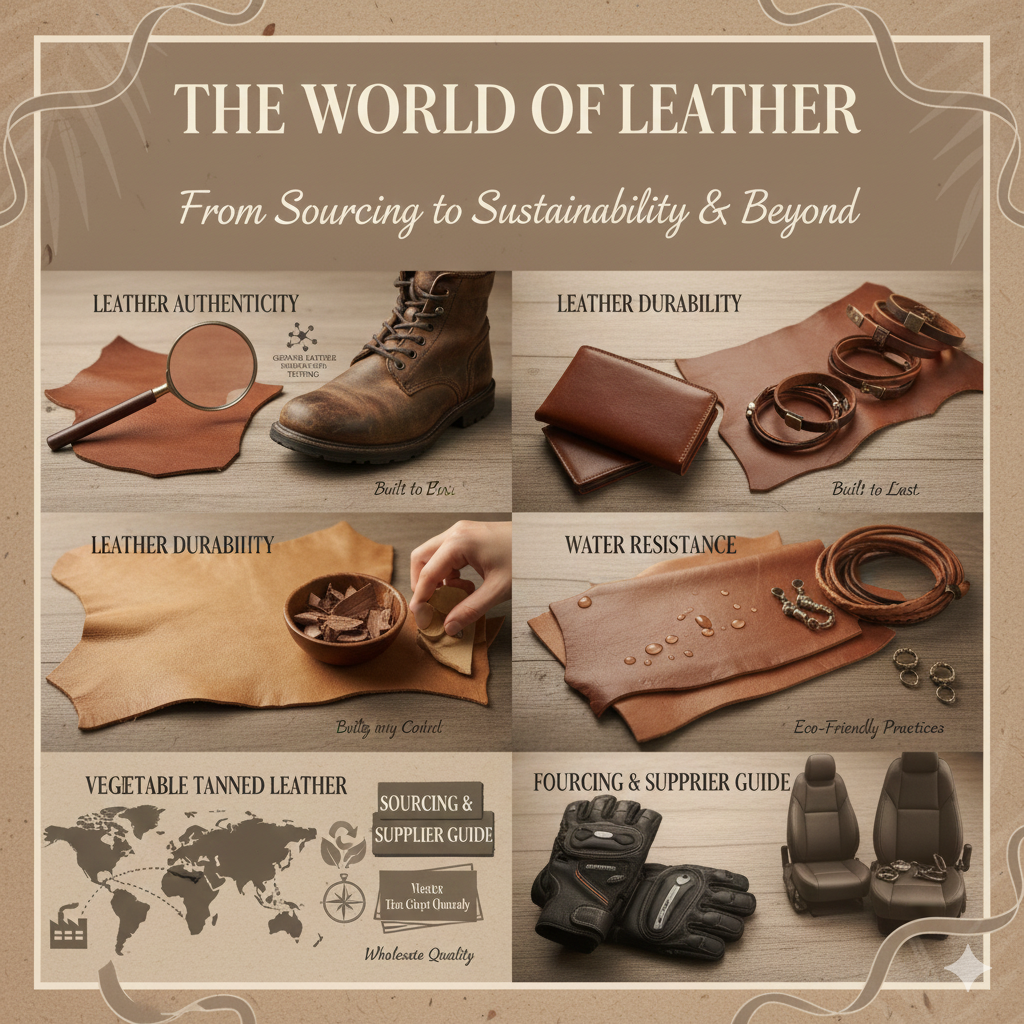
Leather has been a foundation material of global manufacturing for centuries, supporting industries from fashion and automotive to jewelry, interiors, and technical equipment. Yet today, under the pressure of sustainability regulations, innovation, and changing consumer expectations, one critical issue stands at the center of professional discussion: the leather question.
Is natural leather still viable for long-term business strategy? How does it truly perform compared to synthetic alternatives? What determines its lifespan, authenticity, and resistance to real-world conditions such as moisture and daily wear?
This blog addresses five of the most important leather questions that are relevant nowadays such as material performance, product longevity, tactile experience in jewelry, authenticity verification, and the future of the leather industry over the next 50 years. The goal is not marketing language, but practical, material-level understanding for manufacturers, buyers, designers, and sourcing professionals.
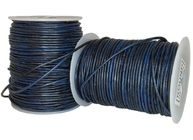
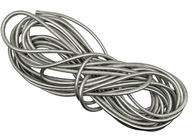
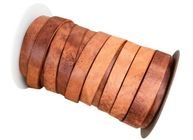
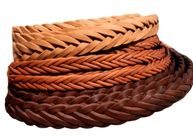
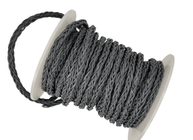
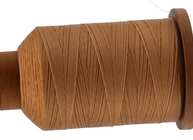
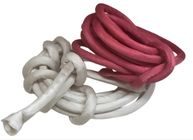
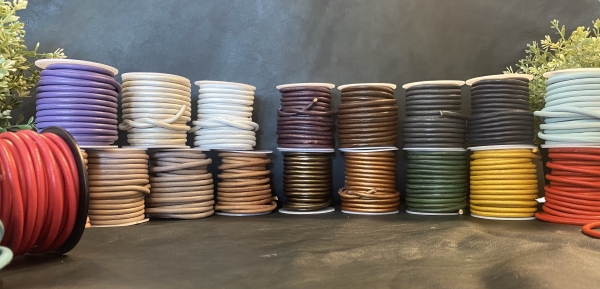
Our collection of round leather cords (small fraction)
1. Will Leather Disappear in the Next 50 Years — or Evolve into Something New?
Leather will not disappear. But it will evolve.
For thousands of years, leather has survived wars, industrial revolutions, digital revolutions, and radical changes in fashion. That alone tells us something: materials disappear when they lose relevance. Leather has never done that. Instead, it continuously adapts.
What will change dramatically is how leather is produced.
The future of leather is being reshaped by three powerful forces:
-
Sustainability pressure
The industry is being pushed toward cleaner tanning methods, water-saving technologies, and traceable supply chains. Vegetable tanning, chrome-free tanning, and closed-loop water systems are becoming more common as brands face environmental accountability. -
Bio-engineered leather
Labs are already growing “leather” from animal cells without raising animals. This creates real collagen-based material without slaughter. While still expensive, this technology is advancing fast. -
Hybrid materials
We’re also seeing combinations like:-
Leather + recycled plant fibers
-
Leather + smart coatings
-
Leather + antibacterial layers
These hybrids preserve natural leather’s soul while adding futuristic performance.
-
What will not disappear is the emotional and sensory value of natural leather. Synthetic materials can replicate appearance, but not history, aging, or memory. In the next 50 years, leather will not vanish. It will split into two paths:
-
Ultra-clean, ethical natural leather
-
High-tech bio and hybrid leather for mass markets
Leather’s story is not ending, it is entering its most technologically advanced chapter yet.
2. Why Does Leather Jewelry Feel Warmer on the Skin Than Metal or Plastic?
This question seems simple, but the answer goes deep into physics and human biology.
Leather feels warm because it is a natural thermal insulator. Unlike metal, which rapidly pulls heat from your skin, leather absorbs heat slowly and then holds it. When leather touches your body, it warms up and stays close to your temperature. Metal always feels cold because it constantly transfers heat away from you.
Plastic behaves differently: it neither holds warmth nor breathes. It often feels neutral at first but quickly becomes sticky because it traps moisture.
Leather, on the other hand:
-
Regulates temperature
-
Allows micro air circulation
-
Absorbs small amounts of moisture
-
Softens with body heat
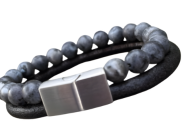
This is why leather bracelets, chokers, and watch bands feel comfortable even after hours of wear, while metal can feel cold, heavy, or irritating.
There is also a psychological layer. Humans subconsciously associate leather with skin, warmth, and safety. Our nervous system recognizes it as a natural material, which creates a sense of comfort that synthetics cannot fully replicate.
That “warm” feeling is both physical and emotional.
3. How Do You Know If Leather Is Real Without a Lab Test?
You don’t need a microscope or a chemical analysis to recognize real leather. Your senses are enough, if you know what to look for. Here are the most reliable real-world tests:
1. Touch and Temperature
Real leather:
-
Warms up quickly in your hands
-
Feels slightly uneven
-
Softens under pressure
Fake leather:
-
Stays cold or plastic-neutral
-
Feels perfectly uniform
-
Has a stiff or rubbery surface
2. Smell
Real leather has a deep, organic, slightly woody scent.
Fake leather smells like plastic, chemicals, or nothing at all.
This is one of the hardest things to fake convincingly.
3. Grain Irregularity
Natural leather has:
-
Uneven pores
-
Slight texture variations
-
Tiny scars or imperfections
Synthetic leather repeats the same grain pattern in perfect symmetry.
4. Edge Test
Look at a cut edge:
-
Real leather shows fibrous layers
-
Fake leather shows a clean plastic edge or fabric backing
5. Water Drop Test
Place a tiny drop of water:
-
Real leather slowly absorbs it and darkens slightly
-
Fake leather lets it sit on the surface
No single test is perfect alone, but together, these signs make authenticity clear within seconds.
4. Can Leather Really Last a Lifetime, or Is That Just Marketing?
It is not marketing. It is material science.
High-quality leather is made from the strongest natural fibers in animal skin, arranged in dense, interwoven collagen structures. This creates a material that is:
-
Tear-resistant
-
Flexible under stress
-
Extremely slow to degrade
When people say leather “lasts forever,” what they really mean is this:
Leather does not fail quickly. It fails slowly — decades slowly.
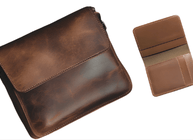
A wallet carried daily can last 20–30 years.
A leather bag used weekly can last 40+ years.
Well-maintained leather furniture can last longer than its owner.
What determines lifespan?
-
Leather quality (full-grain vs bonded)
-
Tanning method
-
Frequency of conditioning
-
Exposure to sun, heat, and moisture
-
Mechanical stress
Low-quality leather does crack, peel, or delaminate within a few years. But that is not a failure of leather as a material — that is a failure of processing and sourcing.
Real leather does not “wear out.”
It wears in.
It develops patina, softens, darkens, and reflects time. That change is often mistaken for aging weakness — but in high-quality leather, it is actually a form of structural maturity.
5. Is Leather Waterproof or Just “Water-Resistant”?
Leather is water-resistant, not waterproof — and that distinction matters.
Because leather is made of natural fibers, it contains microscopic pores. These pores allow breathability but also allow slow water absorption. Light rain, brief splashes, or humid air usually do no harm. But soaking leather overwhelms its natural oils and causes:
-
Stiffness
-
Shrinking
-
Cracking after drying
-
Loss of shape
However, leather can be treated to dramatically improve water resistance:
-
Natural wax coatings
-
Beeswax blends
-
Modern hydrophobic sprays
-
Oil-based conditioners
These treatments create an invisible barrier that slows or blocks water penetration while preserving breathability.
It’s important to understand:
Water itself is not leather’s enemy.
Rapid drying, heat, and oil loss are.
If leather gets wet:
-
Let it dry slowly at room temperature
-
Never use a hairdryer or heater
-
Recondition with oil after full drying
Handled properly, even rain exposure does not shorten leather’s life.
Why These Questions Matter More Than Ever
These five questions reflect something bigger than fashion trends. They reflect a shift in how people think about materials, ownership, and value.
In a world of fast consumption, leather stands for:
-
Long-term use
-
Repair over replacement
-
Aging instead of disposal
-
Emotional attachment instead of instant gratification
People are no longer just buying “products.” They are buying:
-
Origin
-
Story
-
Texture
-
Sensation
-
Longevity
Leather survives because it satisfies both functional logic and human emotion at the same time.
The Final Truth About Leather
Leather is not perfect. It demands care. It requires ethical responsibility. It reacts to environment and time. But that is exactly why it remains powerful.
Plastic is predictable. Metal is permanent but emotionally distant. Meanwhile, leather is alive inside limitation. It changes with you, remembers your life, and reflects your movement through time.
Therefore - no! Leather will not disappear.
It will transform, adapt, hybridize, and modernize. But as long as humans value touch, warmth, story, and durability all at once, leather will remain part of our material language.
Hope this blog was helpful for you and do not forget to follow our Instagram to learn even more useful information!


