



Magnetic vs Lobster vs Toggle Clasps: Which Is Best?
Choosing the right clasp can affect the comfort, security, and appearance of a bracelet or necklace. Although clasps are small jewellery components, they play an important role in how a finished piece looks, feels and functions.
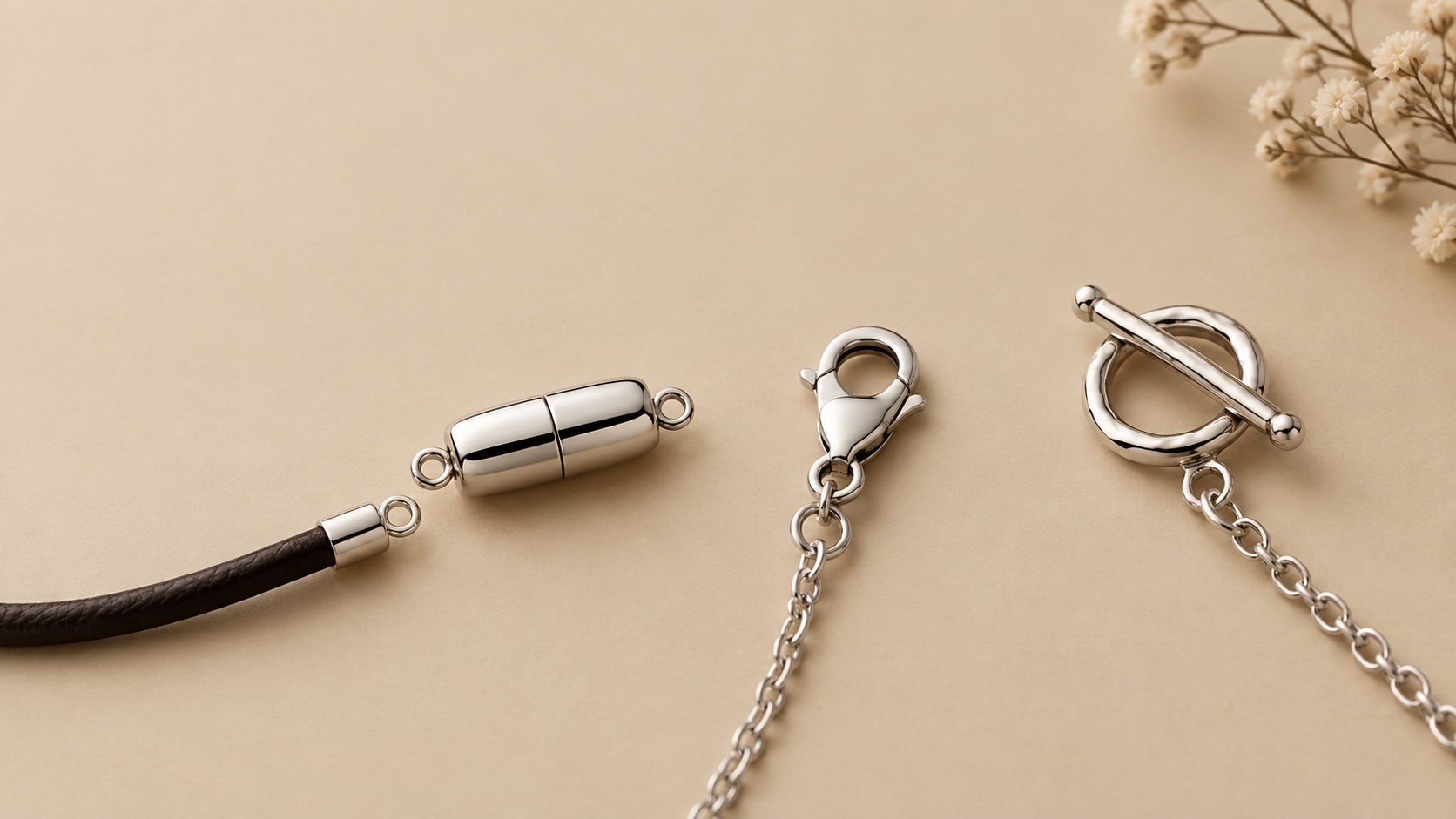
Magnetic, lobster and toggle clasps are three popular options for jewellery making. Each type has different advantages, so the best choice depends on the jewellery design, its weight, the materials used, and the needs of the wearer.
In this guide, we compare magnetic, lobster and toggle clasps to help jewellery designers, brands, retailers and makers choose the right closure for their next project.
Quick comparison
There is no single best clasp for every jewellery design. The right option should match the cord or chain, the weight of the finished piece, the desired appearance and the customer’s experience.
What is a magnetic clasp?
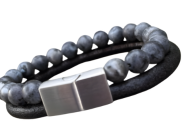
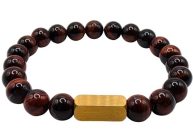
A magnetic clasp uses magnets to connect two sides of a bracelet or necklace. The two parts attract each other and create a quick closure.
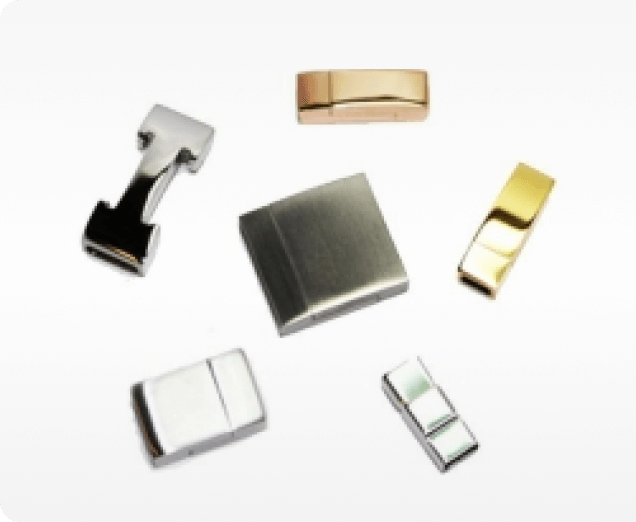
Magnetic clasps are available in many shapes, sizes, materials, and finishes. Common styles include:
-
Barrel magnetic clasps.
-
Ball magnetic clasps.
-
Tube magnetic clasps.
-
Screw-lock magnetic clasps.
-
Slide magnetic clasps.
-
Decorative magnetic clasps.
-
Multi-strand magnetic clasps.
Magnetic clasps can be used with leather, suede, silk, beaded, and cord jewellery. Sun Enterprises offers a wide selection of magnetic clasps and matching leather components for jewellery makers and wholesale buyers. Explore magnetic clasps from Sun Enterprises
Advantages of magnetic clasps
Magnetic clasps are popular because they are:
-
Easy to open and close.
-
Suitable for one-handed use.
-
Comfortable for many wearers.
-
Available in minimalist and decorative styles.
-
Suitable for leather cords and multiple strands.
-
Available in different colours and metal finishes.
They can also be useful for people who find small traditional clasps difficult to operate.
Possible disadvantages
Magnetic clasps are not automatically suitable for every jewellery design.
-
A clasp that is too weak may open under the weight of the jewellery.
-
The clasp must match the cord or material size.
-
Some designs require an additional locking mechanism.
-
Strong magnets may not be suitable for every application.
For heavier jewellery, a screw-lock magnetic clasp can provide extra security by combining a magnetic connection with a threaded locking mechanism.
Best uses for magnetic clasps
Magnetic clasps are particularly suitable for:
-
Leather cord bracelets.
-
Beaded bracelets.
-
Suede jewellery.
-
Multi-strand designs.
-
Minimalist necklaces.
-
Jewellery designed for easy fastening.
-
Modern and contemporary collections.
What is a lobster clasp?
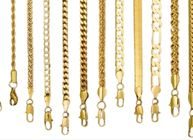
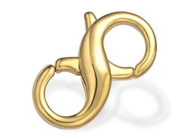
A lobster clasp is a mechanical clasp with a spring-loaded lever. Pulling the small lever opens the clasp, allowing it to connect to a jump ring, chain or other attachment point.
Lobster clasps are widely used because they provide a familiar closure and can be produced in many sizes, materials, and finishes.
Advantages of lobster clasps
Lobster clasps offer several benefits:
-
They work well with chains, cords and jump rings.
-
They are available in many sizes.
-
They suit simple and detailed jewellery designs.
-
They can be used for bracelets, necklaces and anklets.
-
They can be combined with extension chains for adjustable sizing.
- They provide a secure mechanical closure.
A lobster clasp is often a practical choice when security and adjustability are more important than one-handed operation.
Possible disadvantages
A lobster clasp may not be ideal for every customer or design:
-
The small lever can be difficult to operate.
-
It may require two hands to fasten.
-
It may look more functional than decorative.
-
It may need additional rings or connectors.
-
The size must be proportionate to the jewellery.
For a delicate necklace, a large lobster clasp may look unbalanced. For a heavier bracelet, a very small clasp may not provide the right visual or functional result.
Best uses for lobster clasps
Lobster clasps are suitable for:
-
Chain necklaces.
-
Everyday bracelets.
-
Delicate jewellery.
-
Anklets.
-
Adjustable designs.
-
Jewellery requiring a traditional closure.
-
Lightweight and medium-weight pieces.
What is a toggle clasp?
A toggle clasp consists of two parts: a ring or loop and a bar. To close the jewellery, the bar is passed through the ring and positioned across it.
Unlike a lobster clasp, a toggle clasp is often intended to be visible. It can become part of the design rather than being hidden at the back of the jewellery.
Advantages of toggle clasps
Toggle clasps are popular because they are:
-
Decorative.
-
Easy to recognise.
-
Available in many shapes and sizes.
-
Suitable for statement jewellery.
-
Easy to use once the correct technique is understood.
-
Useful as a visible design feature.
A toggle clasp can add a distinctive detail to a bracelet or necklace, especially when the ring and bar have an attractive finish.
Possible disadvantages
Toggle clasps also have some limitations:
-
They may open if the jewellery is too loose.
-
They may not be suitable for very lightweight pieces.
-
The ring and bar must be correctly sized.
-
They may not be ideal for highly active wear.
-
A toggle can be less discreet than a magnetic or lobster clasp.
The weight and fit of the jewellery help keep the bar in place. A toggle clasp should therefore be tested carefully before using it in a finished collection.
Best uses for toggle clasps
Toggle clasps are suitable for:
-
Statement bracelets.
-
Fashion necklaces.
-
Chunky chain jewellery.
-
Bohemian designs.
-
Designs where the closure should be visible.
-
Jewellery with larger decorative components.
Magnetic vs lobster vs toggle clasps
Ease of use
Magnetic clasps are usually the easiest to open and close. The two parts connect quickly and can often be operated with one hand.
Lobster clasps are secure but may be more difficult to operate because the wearer needs to pull a small lever and connect it to a ring.
Toggle clasps can be easy to use, although the bar must be passed through the ring correctly. They are often easier to use on a bracelet than on a close-fitting necklace.
Best option for ease of use: Magnetic clasp.
Security
Lobster clasps provide a mechanical closure and are commonly chosen for everyday jewellery. Magnetic clasps can also be secure, but the holding strength should match the weight and movement of the jewellery.
Toggle clasps rely on the bar remaining in the ring. They can work well when the jewellery fits correctly but may be less suitable for loose or highly active designs.
Best option for a traditional mechanical closure: Lobster clasp.
Best option for additional magnetic security: Screw-lock magnetic clasp.
Appearance
Magnetic clasps are available in discreet, modern and decorative styles. Some can be hidden, while others are designed to become a visible part of the jewellery.
Lobster clasps are usually smaller and more functional in appearance. They are often placed at the back of a necklace or bracelet.
Toggle clasps are usually more noticeable and can be used as a design feature.
Best option for a decorative closure: Toggle clasp.
Suitability for leather cords
Magnetic clasps are especially suitable for leather cords because they are available in different internal diameters and can be matched with round, flat or multiple cords.
Lobster clasps can also be used with leather, but additional end caps, jump rings or connector components may be required.
Toggle clasps are suitable for leather designs when the cord ends can be finished securely and the toggle is large enough for the bracelet style.
When choosing a clasp for leather, always check:
-
Cord diameter or width.
-
The clasp opening.
-
The number of cords.
-
The weight of the finished bracelet.
-
The method used to attach the cord.
-
The desired visual style.
Which clasp is best for a leather bracelet?
The best clasp depends on the bracelet design and intended customer.
The clasp opening should match the cord size. For example, if you use two cords together, the clasp must accommodate their combined thickness. Always test the cords and clasp together before gluing or producing multiple pieces. Learn how to match clasps and leather cords
How to choose the right clasp
Consider the jewellery weight
Heavy beads, gemstones and multiple leather cords require a closure that can support the finished design. A small clasp may not be visually or functionally suitable for a heavy bracelet.
Check the material size
The clasp should fit the cord, chain or wire securely. A clasp that is too small may not accept the material, while an oversized clasp may create an untidy finish.
For example, the inner diameter of a clasp should correspond with the diameter of a round leather cord. If you are using two 4 mm cords, the clasp must accommodate their combined thickness.
Think about the wearer
If the jewellery is designed for customers who value quick and easy fastening, a magnetic clasp may be the most convenient option.
For customers who prefer a traditional closure, a lobster clasp may be more appropriate. A toggle clasp can be a good choice for customers who value a strong decorative detail.
Match the style
Choose a clasp that supports the overall design:
-
Minimal designs often suit barrel magnetic clasps.
-
Natural and bohemian jewellery can suit toggle clasps.
-
Classic necklaces often suit lobster clasps.
-
Contemporary designs can suit slide or decorative magnetic clasps.
-
Luxury designs may benefit from screw-lock magnetic clasps.
Consider adjustability
If the jewellery needs to fit different customers, consider using a lobster clasp with an extension chain or another adjustable component.
Think about production
For a jewellery collection, the clasp should be available in a consistent size, finish and colour. The design should also be practical to assemble repeatedly.
Sun Enterprises supplies jewellery components at wholesale prices and offers a wide catalogue of leather cords, clasps, chains, findings, beads and charms.
Common clasp mistakes to avoid
Choosing a clasp based only on appearance
A clasp should look attractive, but it must also be suitable for the weight, size and construction of the jewellery.
Ignoring the cord diameter
Always check that the clasp is compatible with the leather cord or other material. Correct sizing helps create a secure and professional finish.
Using a weak closure for heavy jewellery
Gemstones, large beads and multiple cords can add weight. Choose a clasp that is appropriate for the finished design.
Forgetting to test the clasp
Before producing a collection, test the clasp several times. Check that it closes correctly, remains secure and is comfortable to use.
Choosing an oversized clasp for a delicate design
A large clasp may make a delicate bracelet or necklace look unbalanced. The clasp should be proportionate to the rest of the jewellery.
Not considering the customer experience
A beautiful clasp is not useful if customers find it difficult to operate. Consider how the jewellery will be opened, closed and worn in everyday life.
Which clasp should you choose?
Choose a magnetic clasp if you want an easy-to-use, modern closure for leather, cord or beaded jewellery.
Choose a lobster clasp if you need a traditional mechanical closure for bracelets, necklaces or anklets.
Choose a toggle clasp if you want the closure to become a visible decorative part of the jewellery.
For wholesale jewellery collections, it can be useful to test more than one clasp style with the same cord or design. This allows you to compare the appearance, comfort and functionality before selecting the final component.
Find jewellery clasps at Sun Enterprises
Sun Enterprises supplies magnetic clasps, leather cords, end caps, connector clasps, chains, gemstones and other jewellery-making components for designers, brands, retailers and manufacturers.
The company’s range includes different clasp shapes, sizes, colours and finishes for round cords, flat cords, multi-strand designs and decorative jewellery. Its catalogue also includes more than 45,000 jewellery-related articles and over 6,000 leather cord variations.
For businesses developing their own jewellery collections, Sun Enterprises also offers wholesale sourcing and customisation options across many product lines.
Explore jewellery components at Sun Enterprises
FAQ
Are magnetic clasps better than lobster clasps?
Neither clasp is always better. Magnetic clasps are generally easier to open and close, while lobster clasps provide a traditional mechanical closure. The best option depends on the jewellery design, weight and needs of the wearer.
Are toggle clasps secure?
Toggle clasps can be secure when the ring, bar and jewellery length are correctly matched. They may be less suitable for very loose or highly active designs because the bar can potentially move out of the ring.
What is the easiest jewellery clasp to use?
Magnetic clasps are usually the easiest to operate because the two sides connect quickly and can often be closed with one hand.
What is the most secure type of jewellery clasp?
A suitable lobster clasp or screw-lock magnetic clasp can provide strong security. The best option depends on the jewellery’s weight, construction and intended use.
Which clasp is best for a leather bracelet?
Magnetic clasps are popular for leather bracelets because they are easy to use and available in different sizes. Lobster, toggle and connector clasps can also work when correctly matched with the cord and end components.
Can I use a magnetic clasp for a heavy bracelet?
A magnetic clasp may be suitable for a heavy bracelet if it has sufficient holding strength and is appropriate for the jewellery’s weight. A screw-lock magnetic clasp may provide additional security for heavier designs. Test the clasp with the finished design before production.
How do I choose the correct clasp size?
Check the diameter or width of the cord, the number of strands and the internal opening of the clasp. Always test the components together before assembly.
What clasp is best for a necklace?
A lobster clasp is a common choice for traditional necklaces, especially when adjustability is needed. A magnetic clasp can be more convenient, while a toggle clasp may be suitable for a statement necklace where the closure is part of the design.
Can I use a toggle clasp on a leather bracelet?
Yes. A toggle clasp can work well with leather, particularly for statement or decorative bracelets. Make sure the ring and bar are large enough for the design and test that the clasp remains closed during movement.
Do magnetic clasps work with multiple leather cords?
Yes. Multi-strand magnetic clasps are designed for several cords or strands. The clasp should have enough connection points and sufficient space for the combined thickness of the materials.
How do I match a clasp to a leather cord?
Compare the clasp’s inner opening with the cord’s diameter or width. The components should fit securely without forcing the cord into the clasp. For multiple cords, consider their combined thickness.
Can I use the same clasp for bracelets and necklaces?
Sometimes, but not always. Bracelets and necklaces can have different weights, lengths and movement patterns. Always check whether the clasp is suitable for the finished jewellery before using it in both designs.


