


How to Choose the Right Leather Cord for Jewellery Making
How to Choose the Right Leather Cord for Jewellery Making
Choosing the right leather cord is an important part of creating jewellery. The cord affects the appearance, comfort, strength, and overall quality of the finished design. With different shapes, thicknesses, colours, and finishes available, it can be difficult to know which option is most suitable.
In this guide, we explain what to consider when choosing leather cord for bracelets, necklaces, and other jewellery projects.
Consider the Type of Jewellery
The best leather cord depends on the type of jewellery you want to create. A cord that works well for a delicate necklace may not be suitable for a wide bracelet or a heavier pendant.
Before choosing a cord, consider:
-
The type of jewellery you are making.
-
The weight of the beads or pendant.
-
How flexible the jewellery needs to be.
-
Which clasp or findings you plan to use.
-
The style you want to create.
Leather cord for bracelets
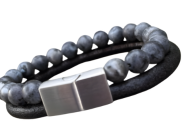
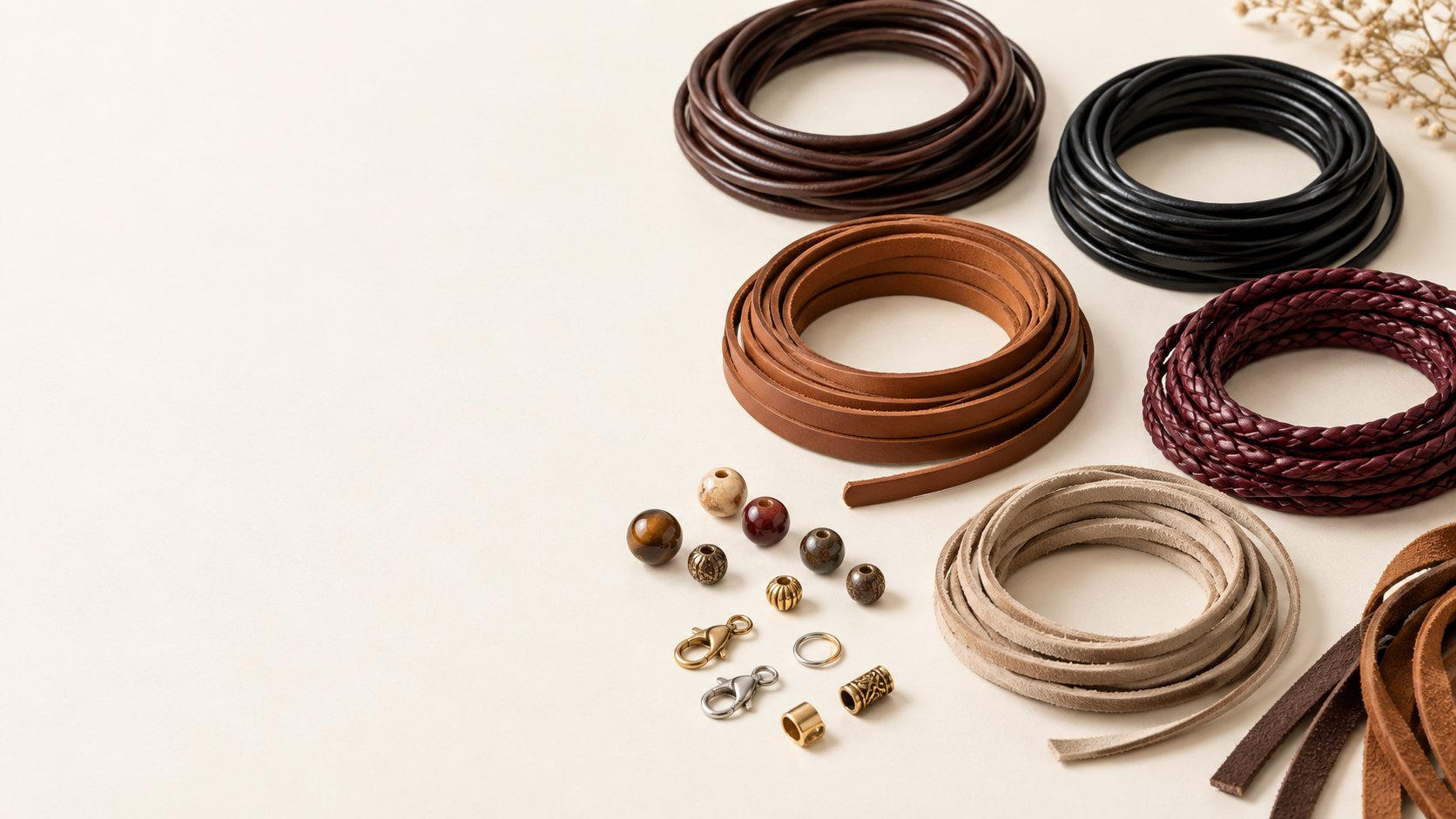
Leather cord is commonly used for bracelets because it is flexible, comfortable, and available in many colours and designs. Round leather cord can be used for simple bracelets, braided designs, and beaded styles. Flat leather cord can create a wider and more visible appearance.
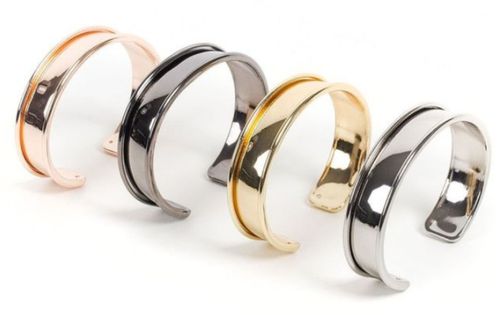
For a bracelet, it is especially important to check that the cord fits correctly into the end caps or clasp. The cord should be secure without being forced into the finding.
Leather cord for necklaces
Round leather cord is a popular option for necklaces because it has a smooth shape and can be combined with beads, pendants, and other materials. A thinner cord can create a delicate look, while a thicker cord can support a larger pendant or create a stronger visual effect.
The weight of the pendant should always be considered before choosing the cord. A heavier design may require a thicker or stronger cord and a suitable clasp.
Leather cord for other accessories
Leather cords can also be used for anklets, keychains, bag details, and other fashion accessories. Sun Enterprises offers leather cords in different shapes, colours, designs, and sizes for jewellery and various craft projects.
Choose the Right Leather Cord Shape
Leather cord is available in several shapes. The shape affects the appearance of the jewellery and how the material can be used.
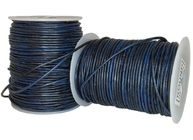
Round leather cord
Round leather cord has a circular profile and is one of the most versatile options for jewellery making. It can be used for:
-
Bracelets.
-
Necklaces.
-
Anklets.
-
Beading.
-
Braiding.
-
Pendant designs.
Round cord is also easy to combine with different findings, although the clasp or end cap must have the correct inner diameter. Sun Enterprises offers round leather cords in different colours and sizes, including 3 mm round cord for necklaces, bracelets, braiding, beading, and fashion accessories.
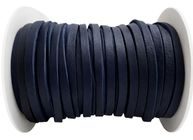
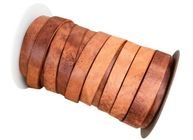
Flat leather cord
Flat leather cord has a wider and flatter shape. It is suitable for designs where you want the cord to be more visible or create a broader surface.
Flat leather cord can be used for:
-
Wide bracelets.
-
Layered jewellery.
-
Braided designs.
-
Minimalist accessories.
-
Designs with flat clasps or findings.
When using flat cord, choose findings specifically made for flat leather. A finding designed for round cord may not hold a flat cord securely.
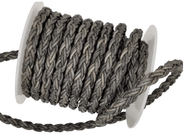
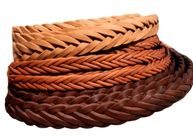
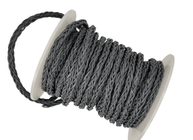
Braided leather cord
Braided leather cord is made by intertwining several strands of leather. It adds texture and visual interest to a design and can create a more casual or distinctive appearance.
Braided cord can be used for:
-
Statement bracelets.
-
Casual necklaces.
-
Keychains.
-
Bag accessories.
-
Layered designs.
Because braided cord can have a different outer diameter from plain cord, always check its size before choosing a clasp or end cap.
Suede leather cord
Suede leather cord has a soft, velvety surface and can create a more delicate or relaxed appearance. It is often used for necklaces, chokers, bracelets, and designs with a softer texture.
Suede cord may be suitable when the texture of the material is an important part of the design. However, it may require different findings from a smooth round or flat leather cord.
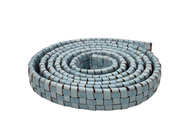
Oval and other specialised cords
Some leather cords have an oval, textured, patterned, or decorative profile. These options can help create a more unusual design, but they require carefully selected findings.
Sun Enterprises’ Nappa collection includes flat, round, braided, and oval cords in different colours and sizes.
Select the Correct Thickness
The thickness of the leather cord affects its appearance, flexibility, strength, and compatibility with other jewellery components.
As a general guide:
-
Thin cords, around 1–2 mm: Suitable for delicate designs, fine details, and some beading projects.
-
Medium cords, around 2–4 mm: A versatile option for many bracelets, necklaces, and decorative knots.
-
Thicker cords, above 4 mm: Suitable for bolder designs and projects that need a stronger, more substantial appearance.
These ranges are general guidelines rather than fixed rules. The correct thickness depends on the design, the weight of the jewellery, and the findings being used. Sun Enterprises’ existing guide also groups leather cords into thin, medium, and thick categories for different craft projects.
Check the cord and clasp measurements
The cord must fit properly inside the clasp, end cap, or connector. The inner diameter of the finding should be compatible with the outer diameter of the cord.
If the finding is too small, the cord may not fit or may become damaged. If it is too large, the connection may be loose and less secure.
Before ordering materials, check:
-
The cord’s outer diameter.
-
The finding’s inner diameter.
-
The shape of the cord.
-
The amount of space needed for adhesive.
-
The weight of the finished jewellery.
Compare Different Leather Types and Finishes
The type and finish of the leather influence how the cord looks and feels.
Nappa leather
Nappa leather is soft and smooth and can create a comfortable, refined appearance. Sun Enterprises describes its Nappa cords as genuine leather made from sheep or lambskin, available in round, flat, braided, and oval shapes. The collection is available in more than 90 colours and sizes from 1 mm to 10 mm.
Nappa leather can be suitable for:
-
Bracelets.
-
Necklaces.
-
Fashion accessories.
-
Colourful jewellery collections.
-
Designs that require a soft finish.
Smooth leather
Smooth leather creates a clean and classic appearance. It can work well for minimalist jewellery and designs where the cord is intended to complement the pendant or other components.
Braided and textured leather
Braided and textured finishes make the cord more noticeable. They can add depth to a simple design and may be suitable for casual, bold, or handmade-looking jewellery.
Suede leather
Suede has a softer and more textured surface. It can give a design a relaxed, bohemian, or delicate appearance.
When choosing a finish, think about how it feels against the skin, how it matches the other materials, and whether it suits the intended use of the jewellery.
Choose a Suitable Colour
Colour is another important factor when selecting leather cord. The right colour can either blend into the design or become a central feature.
Consider the following:
-
Black and brown can create a classic, neutral, or unisex look.
-
Bright colours can make a bracelet or necklace more playful.
-
Natural shades can suit minimalist and everyday jewellery.
-
Dark cords can make lighter beads or pendants stand out.
-
Contrasting colours can create a stronger visual effect.
-
Matching the cord to the clasp can create a more coordinated finish.
If you are creating a jewellery collection, it may be useful to choose a small colour range that works consistently with your brand style. Sun Enterprises offers leather cords in a wide selection of colours and also provides customisation possibilities for specific requirements.
Check Compatibility with Jewellery Components
The leather cord should be chosen together with the other components, not separately. A beautiful cord may not be suitable if it does not fit the clasp, beads, or pendant.
Magnetic clasps
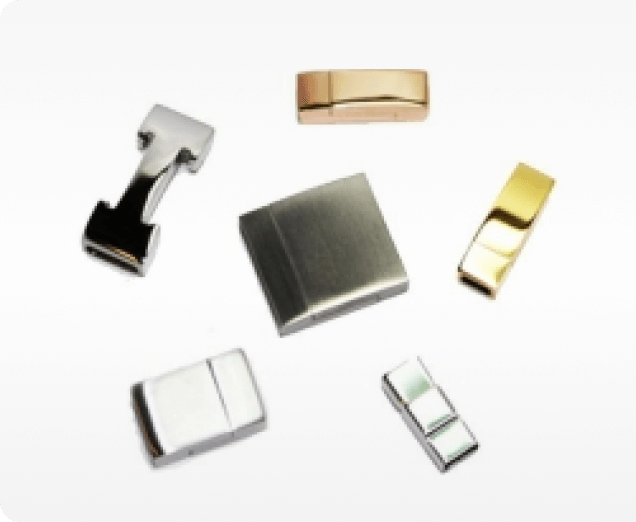
Magnetic clasps are commonly used for bracelets and necklaces because they are easy to open and close. The clasp should match the size and shape of the leather cord.
Sun Enterprises’ magnetic clasp guide explains that different clasp types are suitable for different cord thicknesses and jewellery styles. Barrel clasps can work well with round cords, while slide-style clasps may be more suitable for flat materials.
End caps
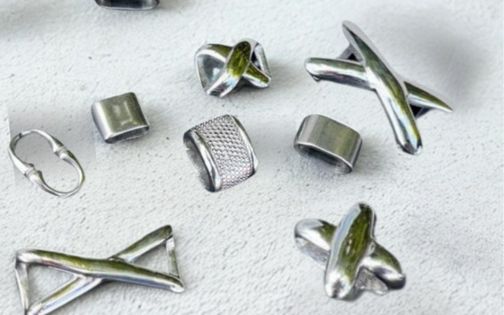
End caps cover and secure the ends of the leather cord. The inner diameter should match the cord as closely as possible.
A fitting that is too loose may create a weak adhesive connection. A fitting that is too tight may prevent the cord from sitting correctly inside it.
Beads and pendants
If you are using beads or pendants, check that the cord can pass through the opening. Thin cords may be suitable for small beads, while larger beads or pendants may require a thicker cord.
Also consider the weight of the pendant. A heavy pendant may need a stronger cord and a more secure finishing method.
Adhesive and finishing
When attaching a clasp or end cap, cut the cord cleanly and use a suitable jewellery adhesive. The cord should be inserted fully into the fitting and allowed to cure before the jewellery is worn.
Sun Enterprises recommends matching the inner diameter of the end cap to the cord diameter and allowing the adhesive to cure properly before using the finished piece.
Test the Cord Before Starting a Collection
If you are producing jewellery for a brand or a larger collection, test the material before ordering in large quantities.
You can make a sample and check:
-
How the cord feels against the skin.
-
Whether it bends comfortably.
-
Whether the colour works with the other materials.
-
Whether the clasp or end cap fits correctly.
-
Whether the cord supports the weight of the design.
-
Whether the finished jewellery is comfortable to wear.
-
Whether the adhesive connection remains secure.
Testing samples can help prevent problems during production and make it easier to choose the right material for the final collection.
For larger orders, it may also be useful to ask the supplier about available colours, sizes, customisation, wholesale quantities, and production times. Sun Enterprises states that it offers a wide range of leather cord styles and can customise items according to specific requirements.
Choosing Leather Cord for a Jewellery Brand
If you are developing a jewellery brand, the cord should match both the product design and the identity of the brand.
A luxury collection may work well with smooth Nappa leather, refined colours, and simple metal findings. A casual or bohemian collection may be better suited to braided, suede, or textured cords. A colourful handmade collection could use several bright shades while keeping the same cord shape and thickness across the products.
It is also important to consider consistency. If a cord will be used across several products, check whether the same size and colour can be reordered when needed.
Final Checklist
Before choosing a leather cord, ask yourself:
-
What type of jewellery am I making?
-
Should the cord be round, flat, braided, suede, or oval?
-
What thickness suits the design?
-
Will the cord fit through the beads or pendant?
-
Does the cord match the clasp or end cap?
-
Is the colour suitable for the design?
-
Is the material comfortable enough for regular wear?
-
Does the cord support the weight of the jewellery?
-
Have I tested a sample before ordering a larger quantity?
-
Can the material be reordered if I create a collection?
Conclusion
The right leather cord depends on more than appearance. The shape, thickness, finish, colour, flexibility, and compatibility with other components all affect the final jewellery design.
Round leather cord is a versatile option for many bracelets and necklaces, while flat, braided, suede, and oval cords can create different textures and styles. Before choosing a cord, always check the measurements of your clasps, end caps, beads, and pendants.
By testing the materials and considering how they work together, you can create jewellery that is comfortable, durable, and professionally finished. Explore Sun Enterprises’ collection of leather cords and jewellery-making components to find materials for your next design.


